
What to Look for Before Booking Your Holiday
☀️ Beautiful accommodation. Comfortable surroundings. A holiday designed around your needs.
Malta offers an impressive selection of accommodation, from luxurious seaside resorts and modern hotels to charming boutique properties located within historic towns.
However, if you are travelling with mobility difficulties, arthritis, reduced endurance, a disability or an elderly family member, choosing the right hotel involves more than comparing prices, star ratings and photographs.
An accessible hotel room does not necessarily guarantee an accessible holiday.
As a Maltese Occupational Therapist and Practice Nurse, both with over two decades of healthcare experience, we encourage travellers to consider how their accommodation and its surrounding environment will influence their independence, comfort and participation throughout their stay.
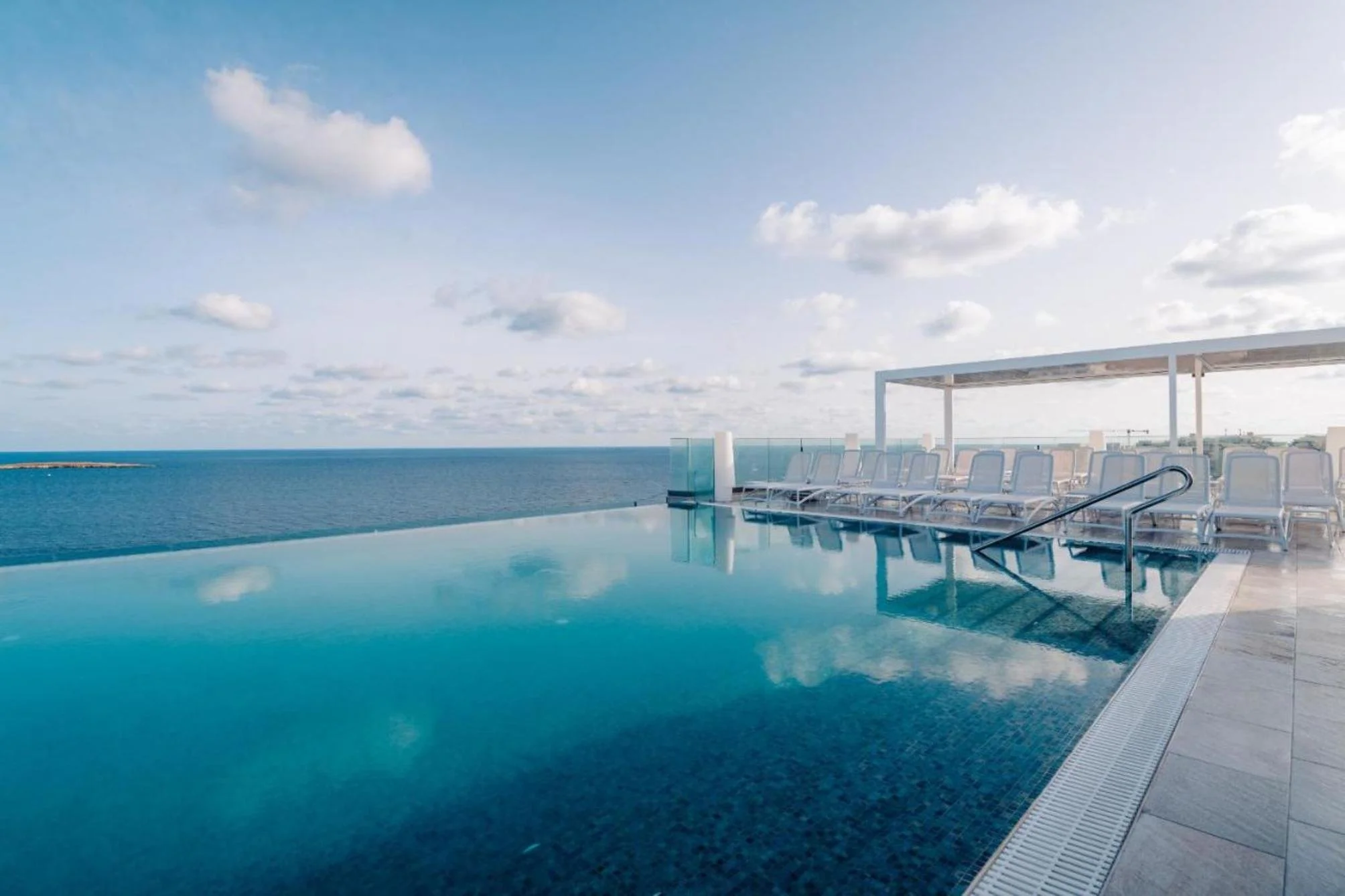
🌴 Location, location, location!
One of the most important considerations when choosing accommodation in Malta is the physical environment immediately surrounding the hotel.
Malta is renowned for its historic limestone architecture, picturesque streets and spectacular coastal scenery. However, these beautiful surroundings can also present challenges, including steep inclines, narrow pavements, uneven walking surfaces and stairs.
Imagine booking a hotel with excellent accessibility features, only to discover that reaching the nearest restaurant requires walking uphill or navigating several uneven pavements.
For someone experiencing reduced walking endurance, this may mean having to rely on transport every time they wish to leave the hotel.
Areas such as Sliema, Qawra, Marsalforn, Buġibba offer relatively manageable sections of seafront promenade, with opportunities to stop for a coffee, enjoy a meal or simply admire the Mediterranean views.
However, even within these areas, the accessibility of individual streets varies considerably.
Historic destinations such as Valletta and Mdina offer beautiful boutique accommodation, but their surrounding terrain should be carefully considered before booking.
Our local insight: A hotel situated 200 metres from the seafront is not necessarily easier to access than one situated 500 metres away. The gradient, quality of the pavement and availability of seating can make a significant difference.
🏨 What does an accessible hotel room actually mean?
The term accessible can mean different things to different travellers.
Someone using a powered wheelchair may require specific doorway widths, sufficient manoeuvring space and suitable bathroom facilities. Someone experiencing fatigue may benefit more from a bedroom located close to the lift, restaurant and reception.
Similarly, someone recovering from hip or knee surgery may require a suitable bed height, supportive seating and a shower that does not involve stepping over a raised threshold.
When booking accommodation, avoid relying solely on the accessible room label.
Contact the hotel directly and explain your individual requirements. Where possible, request photographs of the actual bedroom and bathroom you will be allocated.
It is much easier to clarify these details before travelling than to discover unexpected difficulties upon arrival.
🚿 Bathroom accessibility: A detail worth investigating
Bathrooms are particularly important when considering accommodation suitability.
A beautifully designed bathroom may still present challenges if the shower has a raised threshold, the floor becomes slippery when wet or there is insufficient space to use a mobility aid.
Before booking, consider whether the bathroom includes:
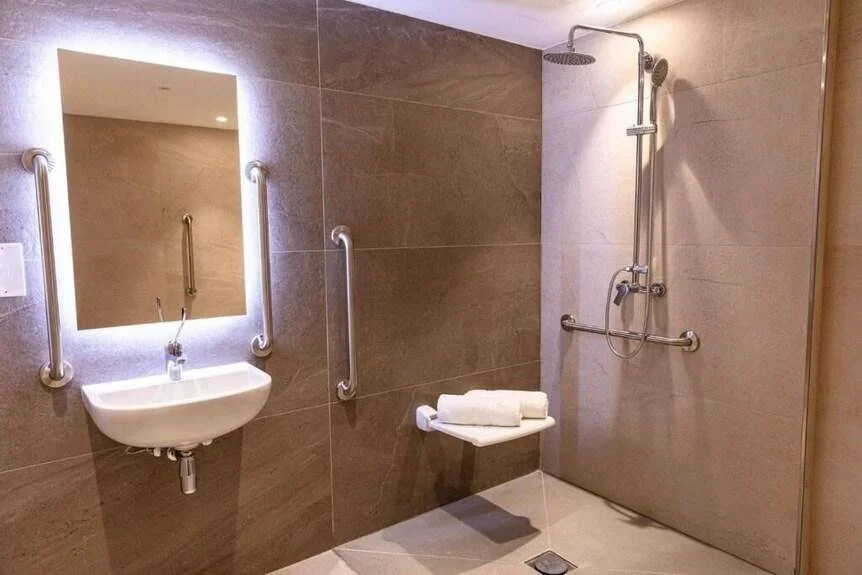
• A level-access or suitably designed walk-in shower.
• Appropriately positioned grab rails.
• Suitable shower seating, if required.
• Adequate space to move around comfortably.
• A toilet height that meets your needs.
• Non-slip flooring.
• Accessible storage and bathroom facilities.
A walk-in shower is not automatically a wheelchair-accessible shower. Ask about the actual layout and dimensions if these are important to you.
Occupational Therapy insight: Independence during personal care can significantly influence confidence and enjoyment throughout a holiday. A bathroom that does not meet your needs may result in unnecessary reliance on others, even when you are normally independent at home.
🛏️ Think about how you will use your hotel
Accessibility extends beyond entering your bedroom.
Consider your typical daily routine while on holiday. You may wish to have breakfast, relax by the swimming pool, visit the spa, enjoy an evening drink or spend time in the hotel gardens.
Large resorts can involve considerable walking distances between these facilities.
For someone experiencing chronic fatigue, arthritis, reduced endurance or breathlessness, repeatedly walking between the bedroom and communal areas may gradually reduce the energy available for sightseeing.
Before booking, ask whether your room can be located close to the facilities you expect to use most frequently.
Also consider the availability of seating throughout the hotel, lift access to communal areas and whether restaurants can be reached without navigating stairs.
Sometimes, a smaller, well-designed hotel may better suit your needs than a large luxury resort.
The most expensive hotel is not necessarily the most suitable one.
🏊 Swimming pools and beach access
Malta's beautiful climate makes swimming and outdoor relaxation an important part of many holidays.
However, having a swimming pool within your hotel does not necessarily mean that you will be able to use it.
Some swimming pools can only be accessed using vertical ladders, while others offer gradual steps, handrails or specialist pool access equipment.
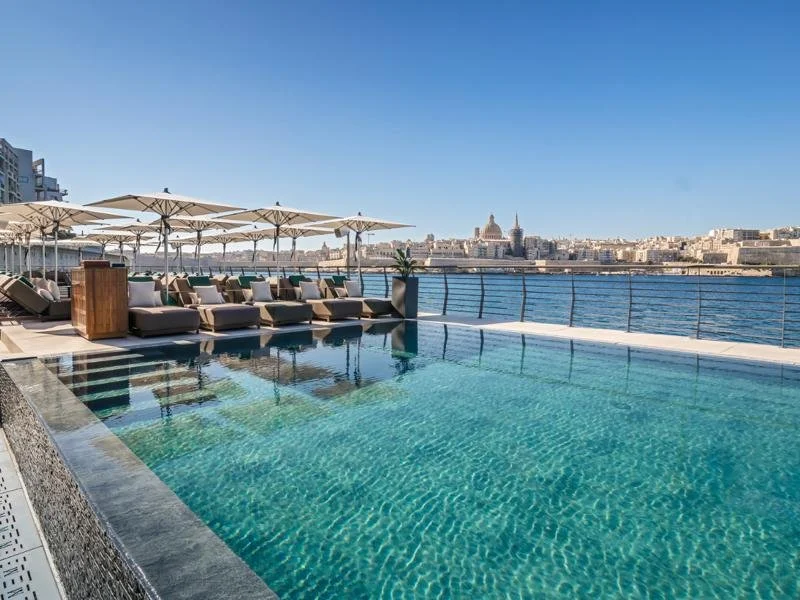
If swimming is important to you, ask about:
• Gradual steps or ramps into the swimming pool.
• Handrails - both sides.
• Availability of pool hoists, if required.
• Accessible changing and toilet facilities.
• Walking surfaces around the pool.
• Shaded seating and sun loungers.
Similarly, a beachfront hotel may offer beautiful sea views without providing an easy route to the beach or into the water.
Understanding the difference between proximity and accessibility can help prevent disappointment.
☀️ Consider Malta's climate when choosing accommodation
Malta's summer months can be particularly warm and humid.
For travellers experiencing fatigue, reduced mobility or difficulty tolerating heat, the availability of air-conditioned spaces and shaded outdoor areas can significantly influence comfort.
Accommodation that allows you to return easily for a midday rest can make sightseeing more enjoyable.
Spring and autumn may also offer more comfortable conditions for travellers who prefer outdoor activities without the intensity of the summer heat.
Nursing insight: Consider how your accommodation will support hydration, rest and temperature management. Easy access to drinking water, air conditioning and comfortable recovery spaces can be particularly valuable during warmer months.
💬 Five questions to ask your hotel before booking
Can you provide photographs and details of the specific room and bathroom I will be allocated?
Is there a continuous step-free route between my bedroom and the hotel facilities?
What is the terrain like immediately outside the hotel?
Can I comfortably reach nearby restaurants, cafés and essential amenities?
Can suitable transport collect me directly from the hotel entrance?
The answers to these questions can provide valuable information beyond what is normally available on hotel booking websites.
🌊 Which is the best accessible hotel in Malta?
There is no single answer to this question.
Two individuals with the same medical condition may have completely different functional abilities, interests and holiday expectations.
A traveller who uses a wheelchair may prioritise physical access, while someone living with arthritis may prefer shorter walking distances and opportunities to rest. Another traveller may place greater importance on a quieter environment and reduced sensory stimulation.
The best hotel is the one that matches your individual requirements and allows you to participate in the experiences that matter to you.
📘 Let Accessible Travel Malta help you choose
At Accessible Travel Malta, we combine healthcare expertise with first-hand knowledge of the Maltese Islands.
Our €20 e-book, Accessible Travel in Malta Through a Clinical & Local Lens, includes a detailed accommodation checklist, local environmental insights, seasonal recommendations and classifications of numerous sightseeing locations according to their physical demands.
If you would prefer individual guidance, our personalised consultations can help you consider accommodation options, surrounding environments, transport arrangements and sightseeing opportunities before committing to your bookings.
We believe that accessibility should support your holiday experience, rather than limit it.
Book the right holiday, not just the right hotel.
🌐 www.accessibletravelmalta.com
📧 accessibletravelmalta@gmail.com
Local knowledge. Healthcare expertise. Meaningful travel.
Written by Cathleen Grima, Occupational Therapist
